Module 4: Interpretation Skill Development | 18F-FET PET Reader Training
Presented by:
Telix Pharmaceuticals
This interactive reader training module complements the 18F-FET PET prescribing information1. By completing an individual review of four comprehensive cases, readers will gain the expertise and confidence necessary for clinical proficiency.
-
4 separate cases are presented.
-
At the start of each case, the patient's history is provided.
-
Instructions and links for accessing the diagnostic images will be displayed.
Please Note: Because Module 3 establishes the foundational approach to image interpretation, it is strongly recommended that Module 3 be completed before starting Module 4.
Viewer Instructions:: To view the 18F-FET PET image sets within Module 4, MIM Software, provided by GE HealthCare Company, is offered. No software downloads or installation are needed. However, acknowledgement of the MIM Software license will be required.
1PIXCLARA images should be interpreted only by readers who successfully complete Electronic Media- or In-Person Training provided by the manufacturer [see Warnings and Precautions (5.1)].
Webinar
|
Module 3: A Comprehensive Case Study Review | 18F-FET PET Reader Training
Presented by:
Michael Veronesi, MD, PhD
This reader training module supports interpretation skill development of 18F-FET-PET. Through case study reviews, Dr. Veronesi shares his clinical expertise including anatomy review, 18F-FET PET reading methodology, comparative modality analysis and tips of how to approach challenging cases. The overall goal of this module is to assist the reader to confidently prepare a report that supports the referring physician(s) when 18F-FET-PET scanning is introduced into the patient’s journey.
Special attention is given to advanced imaging techniques and their limitations in differentiating tumor recurrence from treatment-related changes. In this context, 18F-FET PET is highlighted as a critical modality that helps overcome these challenges by providing complementary functional information, improving diagnostic confidence and guiding clinical decision-making.
Teaching Points
-
Gain clinical experience with 18F-FET PET and its role across the patient’s clinical journey.
-
Identify the independence of 18F-FET PET signal from blood–brain barrier integrity.
-
Appreciate the ability of 18F-FET PET to overcome the limitations and challenges associated with standard care of imaging.
-
Employ 18F-FET PET in combination with advanced MRI techniques such as perfusion, diffusion, and spectroscopy.
-
Improve 18F-FET PET interpretation to include lesion size, enhancing and non-enhancing tumor regions form impactful outcomes in patient management.
Upon completion of Module 3, the participant is invited to visit Module 4 titled "18F-FET-PET Interpretation Skill Development", offering an individual case review opportunity to ‘apply the knowledge’ learned in Module 3.
Note: "Test Your Knowledge” competency measurements in the form of quiz questions, will be displayed throughout the module. Upon completion of this Module, a post-quiz will be offered to provide a Statement of Participation.
Meet the Faculty
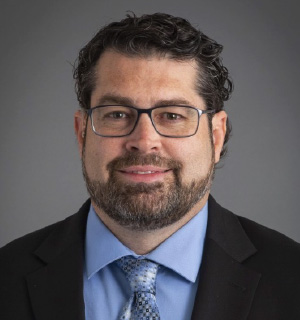 Michael Veronesi, MD, PhD Michael Veronesi, MD, PhD
Associate Professor of Radiology
University of Wisconsin
Dr. Veronesi is a physician scientist and neuroradiologist who completed a radiology residency from 2012-2016 and Neuroradiology fellowship from 2016-2017 at the University of Chicago Medical Center. He was an assistant professor in neuroradiology at the Indiana University School of Medicine from 2017-2023 before joining the University of Wisconsin Department of Radiology as an associate professor in 2023.
Dr. Veronesi is the Director of Neuro-Oncological Imaging at the University of Wisconsin School of Medicine and Public Health within the Department of Radiology, which is tasked with improving the detection of brain malignancies using advanced multi-modality neuroimaging, including hybrid brain PET/MRI, in the clinical care of patients. Other goals of the program are to facilitate preclinical and clinical research initiatives across various multidisciplinary neurological subspecialties, including quantitative MR imaging, PET radiotracers, targeted therapies, and theranostics agents. This work spans the full spectrum from bench to bedside.
Webinar
|
Module 2: The Interpreting Physician Perspective | 18F-FET PET Reader Training
Presented by:
Jonathan McConathy, MD, PhD
This reader training module provides an overview of the technical considerations of 18F-FET-PET imaging as well as an introduction to interpretation skill development. Dr. McConathy shares his clinical expertise and provides insights into the approach of developing the 18F-FET PET report including incorporating an organized reading methodology and managing interpretation challenges. Combined, these skills can develop the consultative role of the interpreting physician.
Teaching Points
-
Understand the mechanism of action (MOA) of 18F-FET PET.
-
Discuss the technical considerations for 18F-FET PET imaging (camera settings, imaging protocols, isotope calibration, etc.).
-
Institute qualitative and quantitative measurement, ratios & interpretation for accurate reporting
-
Develop a methodical approach to interpreting 18F-FET PET.
-
Implement best practices for 18F-FET PET scan interpretation by improving the consultative role of the reader.
Note: This module is supported by additional information presented in Reader Training Modules 3 and 4. Test Your Knowledge” competency measurements in the form of quiz questions, will be displayed throughout the module. Upon completion of this Module, a post-test will be offered to provide a Statement of Participation.
Meet the Faculty
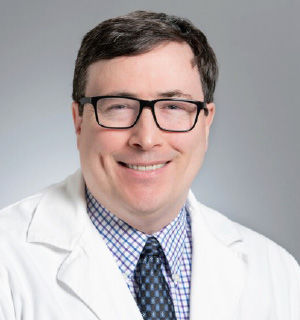 Jonathan McConathy, MD, PhD Jonathan McConathy, MD, PhD
Director, Division of Molecular Imaging and Therapeutics (MI&T)
UAB Heersink School of Medicine
Jonathan McConathy, MD, PhD, completed his MD/PhD training at Emory University School of Medicine in 2004, followed by a transitional internship and residencies in radiology and nuclear medicine at Washington University in St. Louis. Dr. McConathy is currently a Professor of Radiology at the UAB School of Medicine and serves as the Director of Molecular Imaging and Therapeutics (MI&T). His research focuses on PET/MRI for neurodegenerative diseases, nuclear medicine theranostics for cancer, and radiolabeled amino acids. He is actively involved in translational research and clinical trials.
Webinar
|
Module 1: The Referring Physician’s Perspective | The Foundation of 18F-FET PET Reader Training
Presented by:
Nancy Ann Oberheim Bush, MD, PhD
This reader training module offers a foundational understanding of the clinical applications of 18F-FET PET. Dr. Oberheim Bush, an experienced Neuro-Oncologist in the field of gliomas and the associated patient care and management, shares her clinical experiences by providing insights into patient selection and referral indications for 18F-FET PET imaging, with a focus on improving outcomes.
Teaching Points
-
Establish one’s foundational understanding of the clinical utility of 18F-FET PET in neuro-oncology.
-
Review of the Response Assessment in Neuro-Oncology Criteria for Gliomas (RANO).
-
Discuss the indications for incorporating 18F-FET PET imaging in the patient’s journey.
-
Demonstrate the clinical benefits of 18F-FET PET for patients with gliomas.
-
Compare 18F-FET PET to the current standard of care imaging, supporting its clinical utility.
Note: This module is supported by additional information presented in Reader Training Modules 2, 3 and 4. Test Your Knowledge” competency measurements in the form of quiz questions, will be displayed throughout the module. Upon completion of this Module, a post-test will be offered to provide a Statement of Participation.
Meet the Faculty
 Nancy Ann Oberheim Bush, MD, PhD Nancy Ann Oberheim Bush, MD, PhD
Wendy Olson Wood-Smith Endowed Professor
Clinical Director, Division of Neuro-Oncology
Department of Neurological Surgery and Neurology
University of California San Francisco
Dr. Oberheim Bush’s experience encompasses treating a range of adult brain tumors, including gliomas, meningiomas, and brain metastases. In addition to clinical care, she is actively involved in clinical research and teaching, with extensive training in clinical trial development, implementation, and analysis.
Dr. Oberheim Bush’s specific research interests include the development of phase I clinical trials testing novel treatment strategies for brain tumor patients. She is currently developing a phase I clinical trial using an engineered viral vector for immunotherapy treatment in patients with recurrent high-grade gliomas. Additional research interests involve the analysis of molecular and imaging markers of resistance to current standard treatment.
Webinar
|